Britain · UK News Post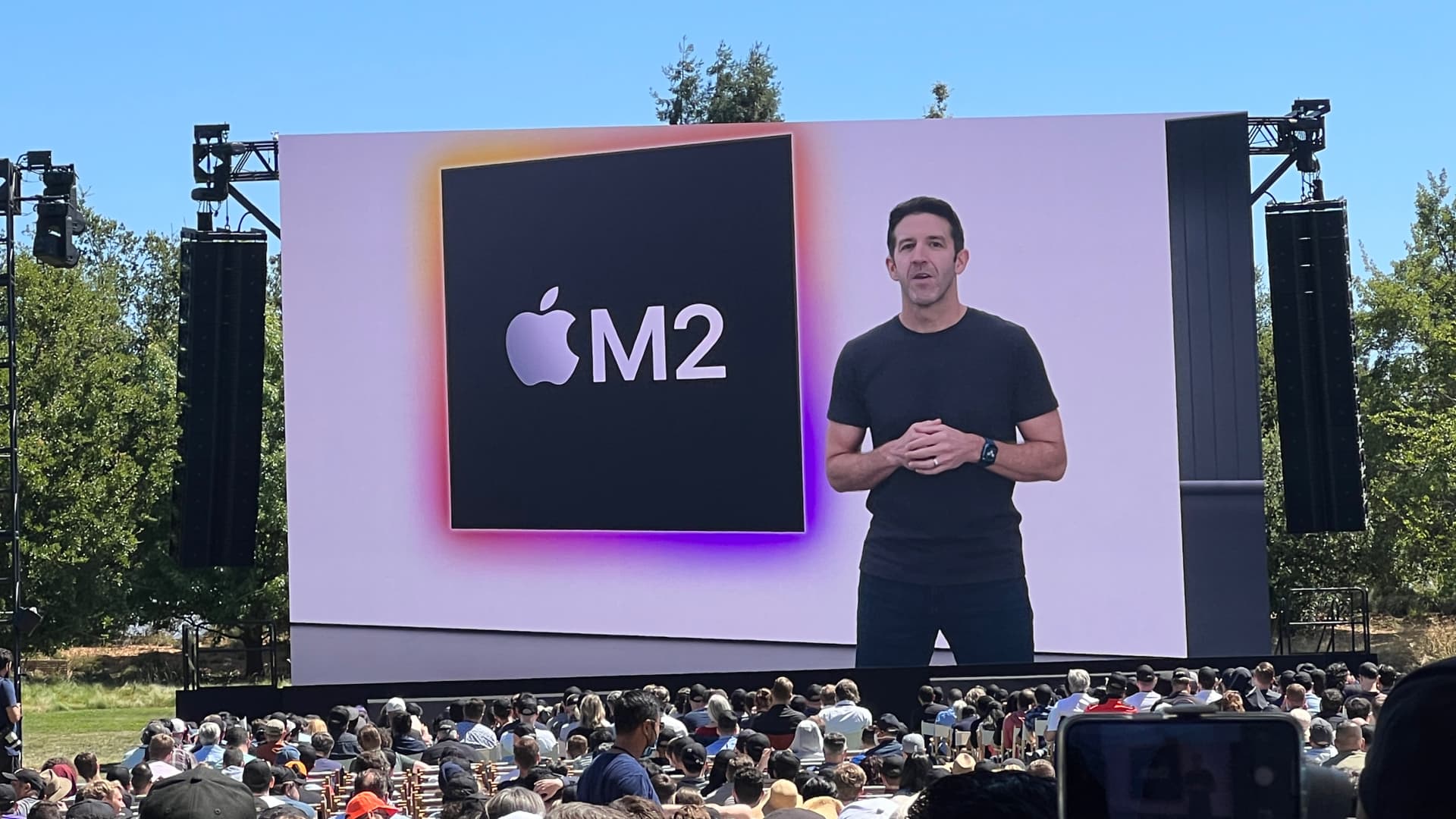
This is CNBC's Morning Squawk newsletter. Subscribe here to receive future editions in your inbox. Happy Wednesday.
Don't miss CNBC's interview with Wells Fargo CEO Charlie Scharf today at 10 a.m. ET. Watch live on CNBC or CNBC+.
Stock futures are lower this morning after a losing day for all three major averages. Here are five key things investors need to know to start the trading day: 1. The Apple cart John Ternus, Apple Senior Vice President of Hardware Engineering, introduces the new M2 microprocessor at Apple's WWDC 2022 developer conference at the company's headquarters, Apple Park, in Cupertino.
Christoph Dernbach | Picture Alliance | Getty Images Apple's annual product event is today, and between its new CEO's debut and expectations for a major iPhone update, it's set to be a big one. Here's what to know ahead of the event: Analysts expect Apple to debut its first-ever foldable iPhone today. Such a product from Apple would be up against Samsung — the foldable market leader — as well as Chinese producers Xiaomi and Huawei.
Bank of America said Tuesday that it is bullish on Apple ahead of the event, reiterating the stock as a buy as the prospect of a foldable iPhone stays top of mind. Analysts will also be listening to see whether Apple raises prices on any of its products following hikes to its MacBook and iPad price tags in July. The event doubles as a debut of sorts for John Ternus , who officially took over as CEO last week.
CNBC will cover the 1 p.m. ET event live, online and on TV. 2. $100 a barrel Traders work on the floor of the New York Stock Exchange during afternoon trading on Sept. 3, 2026 in New York City. Michael M.
Santiago | Getty Images 3. Economic warfare Flags of Canada and United States fly across the international border on the Gordie Howe International bridge that connects Windsor, Ontario, Canada and Detroit, Michigan on September 6, 2026. Jeff Kowalsky | Afp | Getty Images The White House announced last night that President Donald Trump signed a slew of proclamations banning the import of certain Canadian products , including some motorbikes and alcoholic beverages.
News of the new import restrictions, set to kick in on Sept. 29, came on the same day Canada's retaliatory tariffs on the U.S. took effect. Trump also amended the list of goods subject to 50% tariffs in what U.S. Trade Representative Jamieson Greer called a "natural consequence of Canada's continued discriminatory treatment of crucial American exports." That wasn't the only economic action the U.S. took yesterday.
The Treasury Department on Tuesday sanctioned 27 Iranian airlines and some other businesses as it looks to squeeze Tehran's economy. It's part of the U.S.' broader effort, dubbed "Operation Economic Outcast," aimed at roiling Iran's financial health. 4. Meta's Muse Samuel Boivin | Nurphoto | Getty Images Meta on Tuesday unveiled its personal agent app called Muse, which it said can perform tasks like booking appointments and filling out forms.
Users can access the app via a free tier or with a monthly subscription plan, which range from $20 to $100 in price. Alexandr Wang, Meta's artificial intelligence chief, told CNBC that the app runs within "its own isolated environment" and "never sees" details like passwords or payment information. Wang also said Muse "feels very approachable and friendly and explainable." As CNBC's Jonathan Vanian notes, the product comes as Meta faces a broader public reckoning — with legal implications — stemming from its privacy and safety policies.
At the same time, Meta is also under pressure from Wall Street to show it can generate returns from its massive AI investments. 5. Trump's portfolio A news conference with President Donald Trump is seen on a TV monitor on the floor of the New York Stock Exchange in New York, April 6, 2026. Michael Nagle | Bloomberg | Getty Images Trump's largest oil and gas holdings have gained millions of dollars since the Iran war broke out.
A CNBC analysis found that the president's nine largest positions in the sector rose by an estimated $1.5 million to $4.4 million between the eve of the conflict and the end of August. As CNBC's Luke Fountain reports, Trump's accounts have continued trading energy stocks such as ExxonMobil and Chevron during the conflict. Some trades were made on days when Trump's announcements caused notable swings in energy markets.
CNBC found no evidence that Trump directed the trades or that his investment managers had advanced knowledge of the president's decisions. The Trump Organization has said Trump's asset managers use automated trading. The White House said that independent managers oversee his portfolio.
The Daily Dividend CNBC's Official NFL Team Valuations for 2026 dropped this morning. Here are some of the key numbers: Average team worth: $10.36 billion Year-over-year increase: 35% — CNBC's Kif Leswing, MacKenzie Sigalos, Arjun Kharpal, Michael Bloom, Sarah Min, Lee Ying Shan, Spencer Kimball, Anniek Bao, Kevin Breuninger, Chloe Taylor, Jonathan Vanian, Luke Fountain and Michael Ozanian contributed to this report. Josephine Rozzelle edited this edition.
Source: CNBC