Britain · UK News Post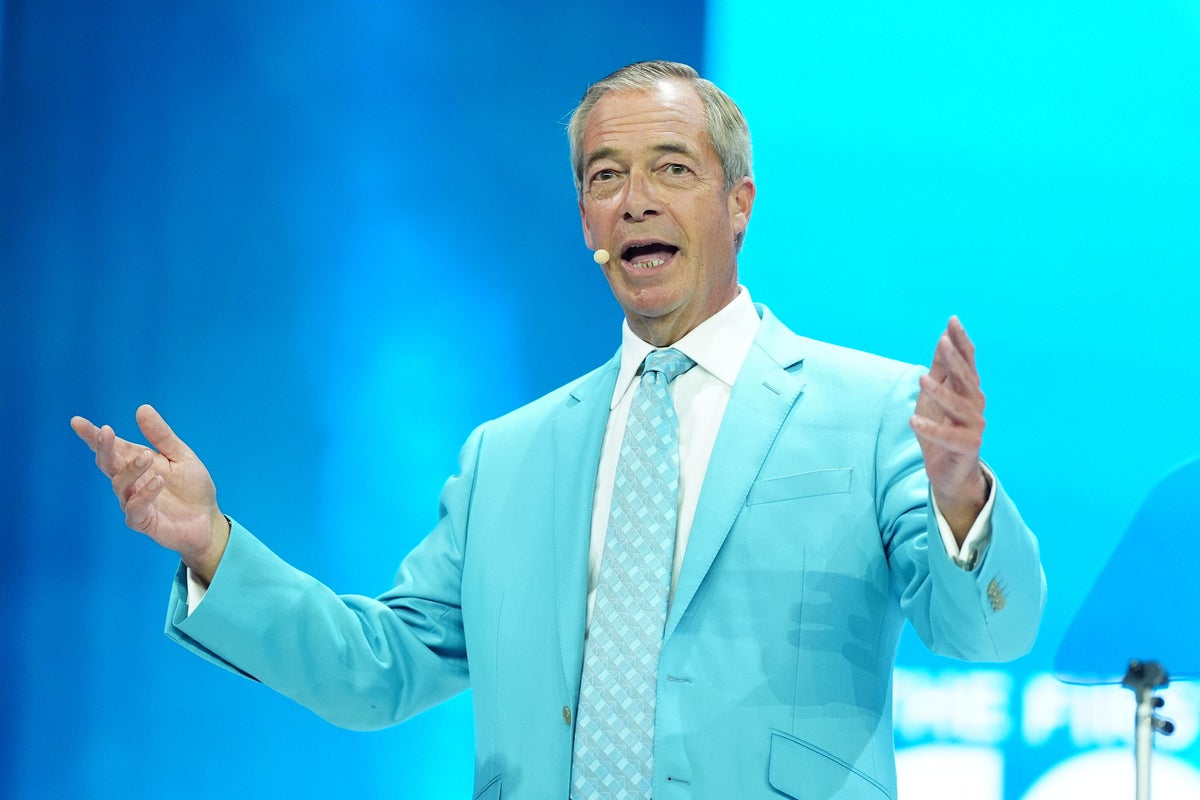
I t is unprecedented in British politics for a ruling party to state that it is planning to change the law retrospectively with the intention of cancelling a rival’s donations. But that was the response of Angela Rayner to the news that Nigel Farage’s Reform UK had received not one but two donations from crypto billionaires Christopher Harborne and Ben Delo totalling £72 million in little over 24 hours. She stated quite bluntly that the Representation of the People Bill 2026 will be used “retrospectively” and “backdated to 25 March” when the law to stop foreign and crypto donations was announced.
Nigel Farage has said the £72 million will be used to fund preparations for Government, but could have to return the money under laws being debated by Parliament. (Stefan Rousseau/PA) (PA Wire) She said: “It's a really live question for us about making sure that our democracy is about the people and them having a choice, and not about people with billions of pounds being able to buy their way in.” But the real question here is whether Labour is trying to save British democracy or itself. A controversial new law The Representation of the People Bill 2026 started under the premiership of Sir Keir Starmer and is being continued by Andy Burnham. It is already proving to be a highly controversial piece of legislation which Labour argues is important to secure the integrity of British politics and increase representation but critics claim is designed to rig the electoral system.
Initially, the legislation was brought forward to increase the right to vote in general elections to 16 and 17-year-olds. That right already exists in Scotland and Wales for councils and the devolved parliaments. While Labour has sold it as being about fairness, both Reform and the Tories argued that this was aimed at increasing the number of leftwing voters because younger voters are more likely to support leftwing parties.
Angela Rayner suggested the Government could still impose a cap on all political donations (Jeff Overs/BBC/PA) (PA Media) But the legislation was expanded once concerns began about large sums of money going to Reform from donors based abroad well before the £72m over the past few days. The alarm bells were ringing when Mr Harborne handed Reform a then-record breaking single donation of £9m in August 2025. Added to that, there was a huge concern about Reform announcing it was taking crypto donations.
Crypto is much harder to trace than normal currency and can be used in transactions without ever needing to convert it into normal currency, which means it can be hidden from the authorities at all stages. Protecting democracy Ms Rayner, and before that other Labour ministers have argued that the rules need to change urgently to protect the integrity of British democracy. As she put it on Sky News on Sunday: “Our democracy is not for sale.” There is a serious concern that the rules, as they stand, are allowing billionaires living outside the UK and not paying tax in the UK to influence British democracy with their wealth.
Certainly, more than £92m of donations from crypto billionaires – including £20m before the latest pledges from Mr Harborne and Mr Delo – moves the dial significantly in Reform’s favour. It allows them to pay for more billboards, print more leaflets, support and train more candidates, employ many more staff – but at what cost? The issue is that wealthy people and organisations do not just hand out money for the sake of it.
They usually want something in return. Christopher Harborne gave £9m to Reform in August 20225 followed by £36m last week (Christopher Harborne) Labour and others are linking Mr Farage’s promotion of the crypto industry, including personal investment in it and a promise to deregulate the sector, to the sudden and massive interest in crypto billionaires in funding his party. While Reform say they will not be handing out knighthoods or peerages to their mega donors like other parties have done, it is also fair to say that not all donors are looking for gongs and baubles in return.
The case for Reform Reform UK insists the donations are legal and, in the words of Treasury spokesman Robert Jenrick, are “a breakthrough moment” for the party. Interestingly, former Tory cabinet minister Michael Portillo, who is no fan of Reform, welcomed the donations because he thought it improved British democracy. The issue is that the system mitigates strongly against insurgent parties and very much in favour of the established parties.
It is why the UK has not had a truly successful breakthrough party for more than a century when Labour effectively replaced the Liberals. The cash which has gone to Reform allows it to compete on an even keel with the other parties. Robert Jenrick said the donations were legal (PA) Mr Jenrick argued that Labour currently has some form in trying to manipulate democracy when it comes to dealing with Reform.
Recently, the courts have overturned some of Labour’s plans for local government reform and the government also lost a court battle over its attempt to cancel some local elections last May in areas where Reform did very well. It is true to say that Reform’s surge in the polls, which took them well over 30 per cent last year, has spooked Labour, the Tories and other established parties. So the war on donations can easily be portrayed as the failing mainstream parties trying to protect their place unfairly in the political market place.
It is worth noting as well that the Labour government does not actually want to cap donations, as is being called for by the Lib Dems, Greens, SNP and Plaid Cymru. This is because Labour does not want to limit the money it gets from the trade unions, which others have called a distorting factor in British politics before. Labour should beware of precedent While there are strong reasons to be very concerned about mega donations from billionaires distorting British politics in a way we see happening regularly in the United States, there is a difference between acting to change the future and acting retrospectively.
In being so brazen about trying to remove funding that a rival party has received, Labour opens an entire new Pandora’s box on the issue. While they may celebrate forcing Reform to hand back £72m, it can look like an attempt to unfairly nobble a political opponent which will not go down well with voters. But more dangerously, if Reform were to win power – which is not impossible – they could easily point to Labour’s actions to justify their own attempt to block other parties receiving funding.
For example, they could use it as background to ban trade union donations and try to do it retrospectively. So when Labour passes this bill, as it will, Andy Burnham and his ministers need to beware of creating a tit-for-tat scenario which could be far worse for British politics in the long run.
Source: The Independent